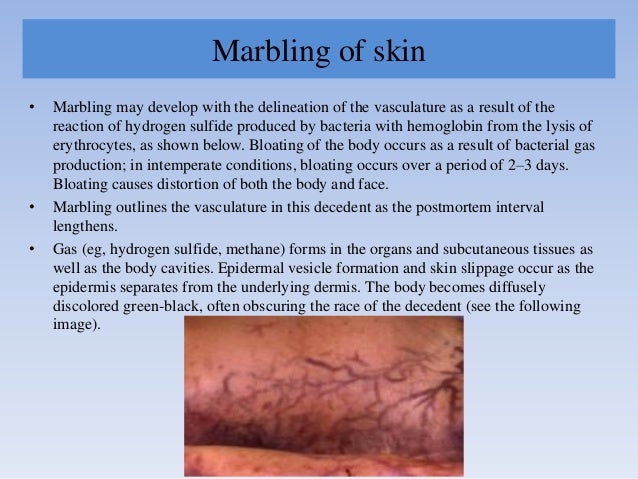
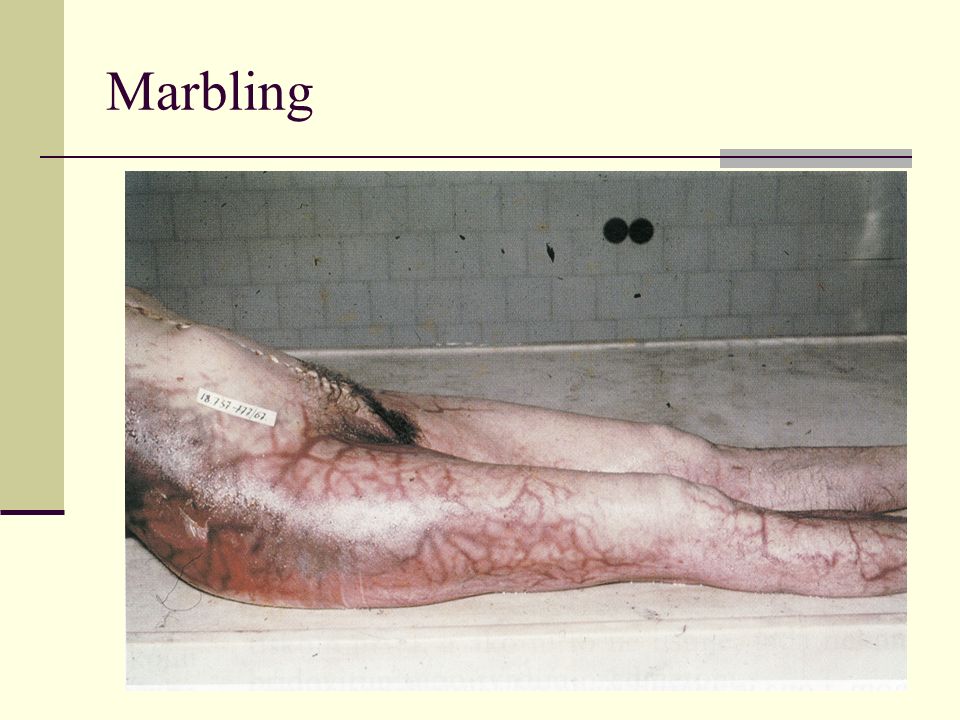
Marbling over the trunk and limbs is another.
Marbling time of death.
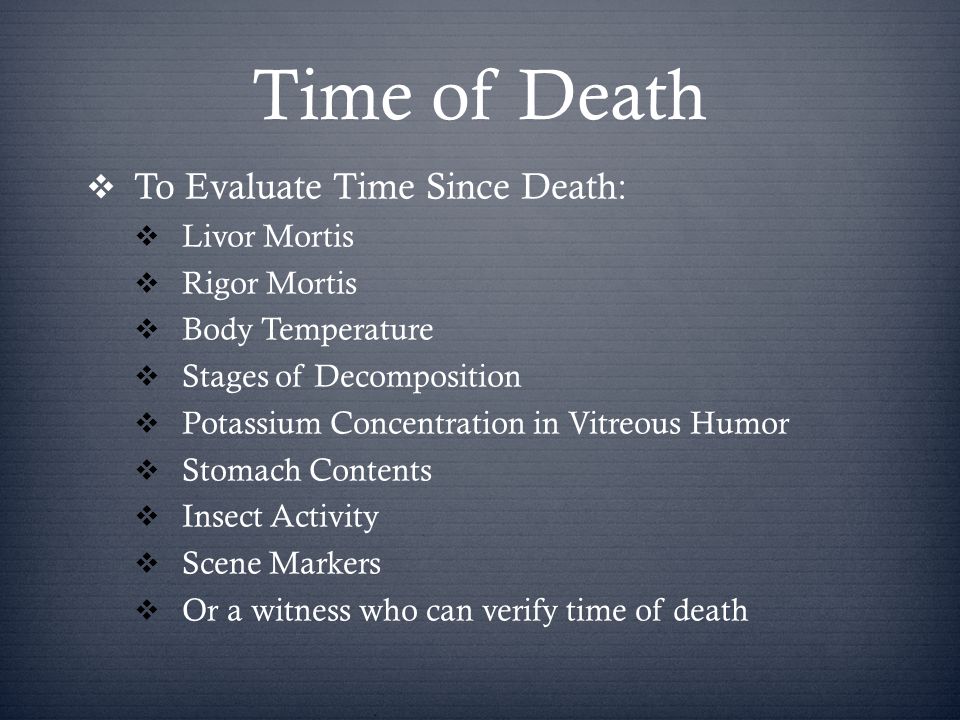
Understanding common postmortem changes and the variables that affect them allows the forensic pathologist to more accurately estimate the postmortem interval.
Mottling is blotchy red purplish marbling of the skin.
Fresh stage roughly 0 12 hours after death in the first hours following your death your body shows no outward signs of decomposition but lots of stuff is going down on the inside.
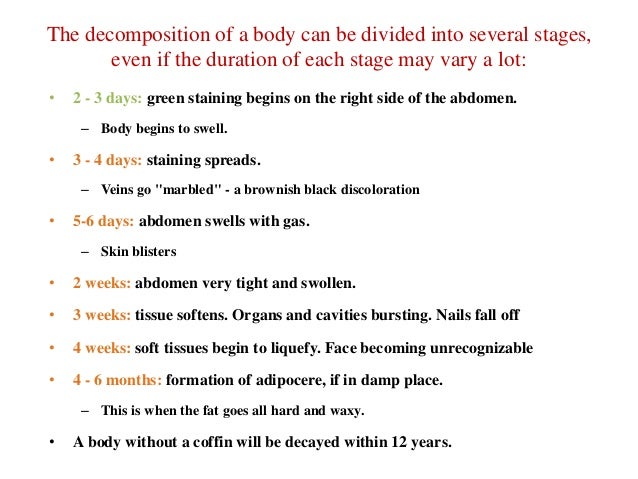
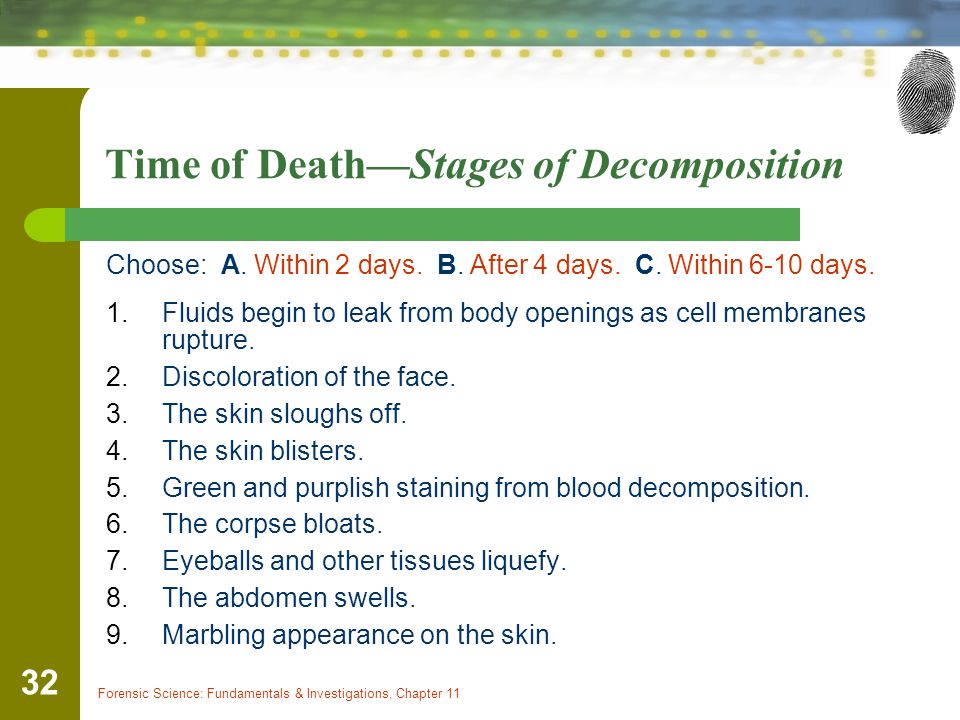
3 5 days after death the body starts to bloat and blood containing foam leaks from the mouth and nose.
Onset of lividity its location and color provide information on the time and cause of death.
Marbling forensic pathology venous patterning a mosaic of discoloration due to prominent subdermal vessels on the skin of a body in early decomposition decay sports medicine skin marbling mottling of skin seen in divers with pulmonary barotrauma and air embolism.
Several weeks after death nails and teeth fall out.
After death the body enters a long process of decomposition as its organic elements split into simpler components.
Mottling most frequently occurs first on the feet then travels up the legs.
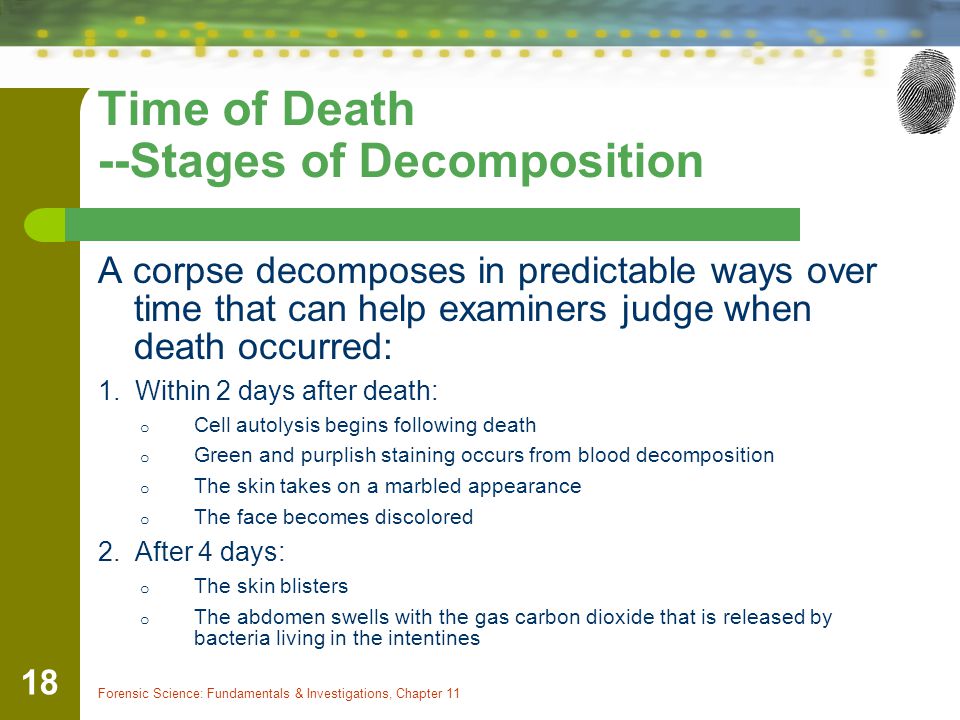
After death a sequence of changes naturally occurs in the human body.
Mottling of skin before death is common and usually occurs during the final week of life although in some cases it can occur earlier.
The classic rigor mortis or stiffening of the body from which the term stiffs derives begins around three hours after death and is maximal at around 12 hours after death.
Vibices are pale marks on a dead person s skin that are caused by dermal pressure.
Postmortem skin changes include livor mortis vibices tardieu spots and marbling.
Marbling tache noire and of course putrefaction.
8 10 days after death the body turns from green to red as the blood decomposes and the organs in the abdomen accumulate gas.
Algor mortis which refers to cooling of the body is one of the earliest changes observed and is confirmed by checking the skin temperature of the body.
Beginning at around the 12 hour mark the body again becomes more flaccid as it was at the time of death.
Although these changes proceed in a relatively orderly fashion a variety of external factors and intrinsic characteristics may accelerate or retard decomposition.
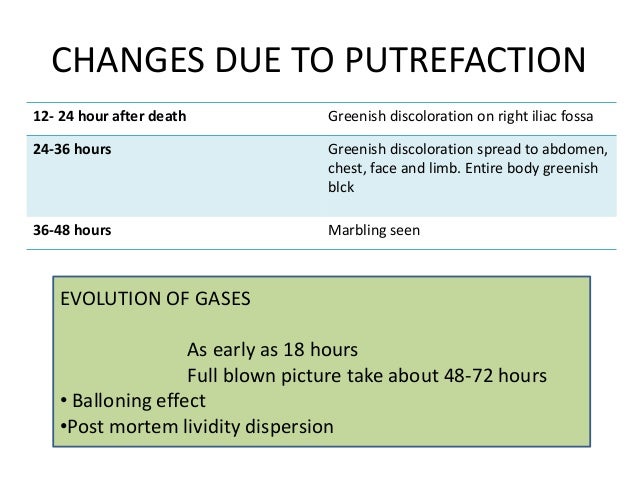
A study of the skin is particularly important to determine the time of death which can be estimated within the first 48 hours of death.