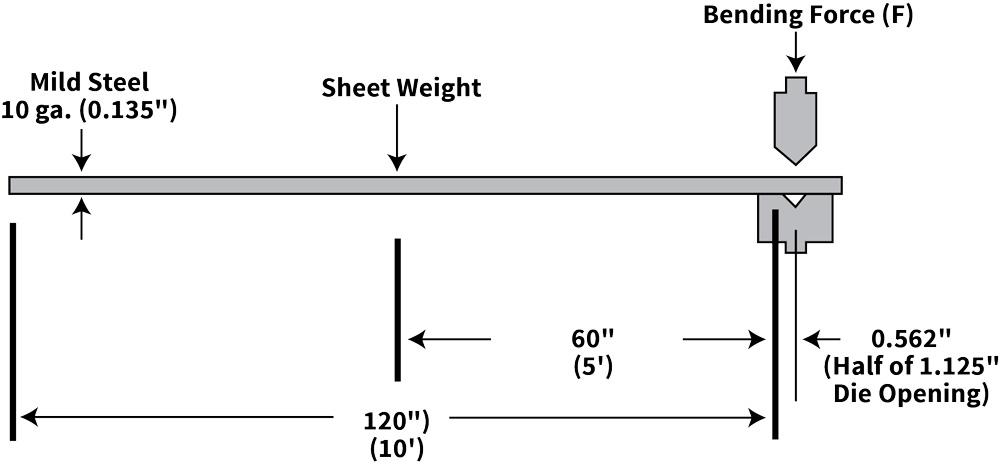
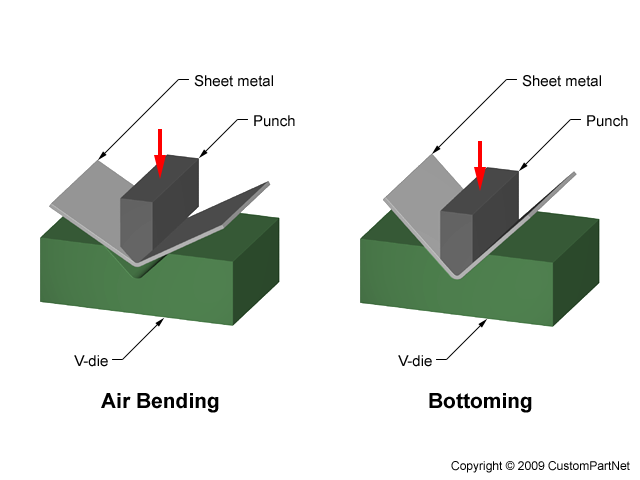
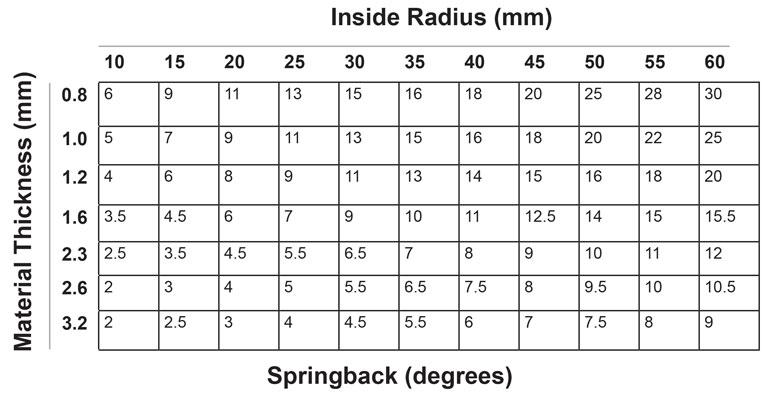
An air bend force chart or force chart breaks down a number of key components of sheet metal bending in an easy to reference format.
Minimum bend radius mild steel sheet.
So in this case the minimum inside bend radius is 2 times the material thickness.
The gauge inside radius die opening and minimum flange length are all interconnected through different equations and relationships the air bend force.
Since commercial sheet metal bending can be done with less concern for stresses caused during forming operation the radius can be near zero for thin sheet metal.
In steel between 0 5 and 0 8 in.
Finding the true minimum bend radius for steel or aluminum plate requires a little research.
If the material is 0 5 in.
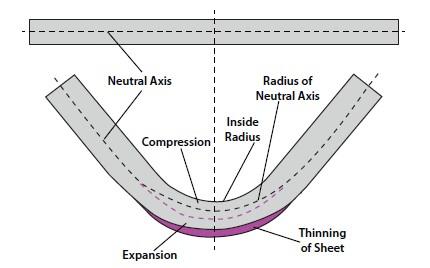
The minimum bend radius data shown in these charts is measured to the inside of the bend.
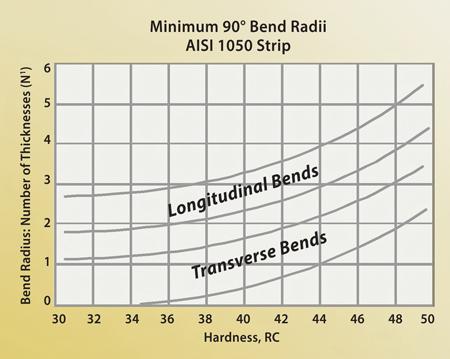
Thick grade 350 and 400 may have a minimum bend radius of 2 5 times the material thickness when transverse bending while longitudinal bending may require a minimum bend radius that s 3 75 times the material thickness.
Let s say i have a 2 mm thick sheet and i want to bend it.
Steve benson the president of asma llc shares a handy rule of thumb for determining the minimum bend radius for steel forms.
This value will vary by grade.
To keep it simple i also use a 2 mm inside radius.
Being able to read a bend force chart is crucial for any brake press operator and sheet metal engineer.
Use this document to choose values that are both manufacturable and meet your needs.
The required die width is 12 mm and tonnage per meter is 22.
Bend radii minimum bend sizes.
Note that this is just a rule of thumb.
The lowest common bench capacity is around 100 tonnes.
This tool allows you to determine tonnage internal radius v die opening and minimum flange you just have to insert the characteristics of the sheet metal to be bent.
The bend radii listed are standard minimum if manufacturing for aircraft and aerospace applications.
It is most economical to use a single bend radius throughout the design but if necessary you can utilize multiple radii.
Divide 50 by the material s tensile reduction percentage as specified by your supplier.
Determining the minimum internal radius for a bend in sheet metal.
Again the minimum inside bend radius is even larger when bending with the grain.
The minimum inside bend radius is even larger when bending with the grain.
Bend radii and minimum bends are limited to certain values or ranges which are determined by the equipment and tooling combinations available to the manufacturer.
The tool can calculate the required bending force for bending aluminum stainless steel mild steel and weldox or strenx high strength steels.
Discover all our calculation tools in the calculators section of the top menu.
Thick grade 350 and 400 may have a minimum bend radius of 2 5 times the material thickness when transverse bending while longitudinal bending may require a minimum bend radius that s 3 75 times the material thickness see figure 1.
When designing sheet metal parts and enclosures it is helpful to use these values as the basis for your design.
In steel between 0 5 and 0 8 in.
4 0 5 2.